


Will Hockey Africa Cup for Club Champions reclaim spark in 2026?




.jpg)




Reading Time: 5min | Mon. 12.01.26. | 09:29
With nine men’s and four women’s clubs confirmed for the 2025 tournament, the competition grapples with issues that could redefine its legacy: faltering club interest, shrinking fields, and the absence of traditional heavyweights
For decades, the Hockey Africa Cup for Club Champions (ACCC) stood as the supreme club competition in African field hockey, a stage where the continent’s best pitched battle for regional supremacy and continental glory.
First contested in the late 1988 for men and in 1996 for women, the ACCC once boasted robust participation from powerhouse hockey nations across Africa: South Africa, Egypt, Kenya, Zimbabwe, Ghana, Namibia and others.
Follow our WhatsApp channel for more news
In its early years, clubs like Egypt’s El Sharkia, South Africa’s Old Eds, Technikon Natal and Western Province, Kenya’s Sliders and Telkom Orange, and Zimbabwe’s Bulawayo HC consistently elevated the tournament’s competitive tone.
Yet, as the ACCC approaches its 36th men’s and 27th women’s editions scheduled for 24–31 January 2026 at St. John’s College Astro Turf in Harare, Zimbabwe, questions linger about its relevance in a rapidly evolving hockey landscape.
With nine men’s and four women’s clubs confirmed for the 2025 tournament, the competition grapples with issues that could redefine its legacy: faltering club interest, shrinking fields, and the absence of traditional heavyweights.
Where have clubs gone?
A decade ago, ACCC tournament schedules regularly featured double-digit participation across both genders.

Clubs from South Africa, historically one of the strongest hockey nations globally, routinely lined up against counterparts from Egypt, Kenya, Zimbabwe and beyond.
The likes of Old Eds, Maties, and Western Province tested themselves against continental rivals, lending the event both competitive depth and distinctive narrative arcs.
Today, however, the picture is starkly different.
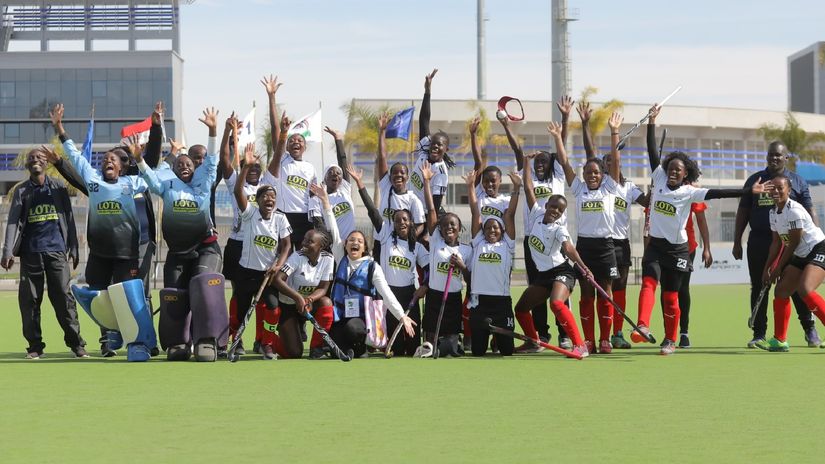
In the women’s category, only four teams are lined up: Ghana Revenue Authority (GRA), Kenya’s Lakers, and Zimbabwe’s Bulawayo HC and Hippo HC.
The men’s list comprises nine teams: Egypt’s Portfouad and Sharkia, Ghana’s GRA, Kenya’s USIU, Namibia’s School of Excellence (SoEHC), Uganda’s Kampala HC, Zambia’s Hotspurs, and Zimbabwe’s Bulawayo HC and Hippo HC.
This limited roster reflects a trend sports stakeholders can no longer ignore: the ACCC is no longer drawing the broad continental participation it once did.
Has ACCC lost competitive incentive?
The question warrants examination on multiple fronts.
Central to this is the absence of South African clubs for over two decades.

South Africa’s local club champions have consistently shied away from ACCC competition since the early 2000s, opting instead to focus on strong domestic leagues and overseas opportunities.
For a country that routinely produces world-class players and competitive national teams, this absence deprives the ACCC of high-profile rivalry and the sense of continental competition that once defined it.
Without South African representation, the ACCC often sees Egypt and Ghana emerge as default frontrunners, particularly on the men’s side with clubs like El Sharkia dominating, and GRA Ladies assuming perennial women’s status.
Predictable dominance: Intrigue or attrition?
Dominance can be compelling, until it is not
In sport, repeat champions and predictable finals can paradoxically undermine competitive curiosity when they become the norm.

In the women’s competition, for example, Ghana Revenue Authority (GRA) Ladies have established themselves as the standout force in recent years, peaking in parallel with dwindling participation.
Before GRA’s era, Kenya’s Telkom Orange Hockey Club - now rebranded as Blazers HC was the standard-bearer of women’s club hockey in Africa.
While GRA’s excellence deserves recognition, the lack of varied challengers raises a broader concern: Is the ACCC still the most vibrant and competitive club platform on the continent?
For sponsors, broadcasters and players alike, predictable outcomes dilute the allure of competition.
Financial strain vs Continental prestige
Cost remains an underappreciated barrier.
For many clubs across Africa, the financial calculus is stark: travel, accommodation and logistical expenses often outstrip available budgets.

Without significant prize money, sponsorship backing, or meaningful world-stage qualification incentives attached to the ACCC, clubs must weigh the prestige of continental competition against the practical realities of trying to operate sustainably.
In Europe and Asia, club competition pathways increasingly link to global tournaments and lucrative broadcast arrangements.
The ACCC, by contrast, has struggled to assert its commercial relevance in a crowded sporting calendar.
This dynamic has particularly affected clubs that cultivate talent but find limited return on investment from continental commitments.
The South African question
Perhaps no single factor captures the ACCC’s contemporary challenges more starkly than the absence of South African clubs.
South African hockey infrastructure, training programs and club competitions have, over decades, produced athletes and teams capable of competing at the highest level.
South African clubs have largely spent the last two decades outside ACCC competition.
Their continued absence casts a long shadow over the tournament’s status as truly continental.
Without regular participation from one of Africa’s strongest hockey nations, the ACCC risks being perceived as a regional rather than pan-African showcase.
2025 edition: A Chance for renewal?
Still, the upcoming ACCC could be an inflection point.
The confirmed list, though modest in size, reflects lingering commitment from core hockey communities in Egypt, Ghana, Kenya, Zimbabwe and beyond.
The presence of dual Egyptian entries on the men’s side, alongside entrenched clubs from elsewhere, promises competitive matches and local derby intrigue.

For women’s hockey, the smaller field offers an opportunity for narrative depth: Can GRA’s dominance continue?
Will Lakers HC and Zimbabwean clubs rise to the occasion? These are questions that augur well for spectator interest despite the limited team count.
Yet, the broader challenge remains: how can the ACCC evolve into a competition that clubs across Africa feel compelled, not compelled to enter?
The Africa Cup for Club Champions stands at a crossroads.
Once a beacon of continental club hockey, it now faces structural and participation challenges that threaten its identity.
Yet the sport’s growth across Africa, illustrated by vibrant local leagues, committed players, and passionate fans, suggests that the ACCC’s story is far from over.

What remains vital is a concerted effort by all stakeholders - clubs, national federations, and the African Hockey Federation to reignite competitive incentives, broaden participation, and reaffirm the ACCC as the pinnacle of African club hockey.
If this happens, the tournament can surely reclaim the prestige it once commanded and build a legacy fit for the future of the sport.